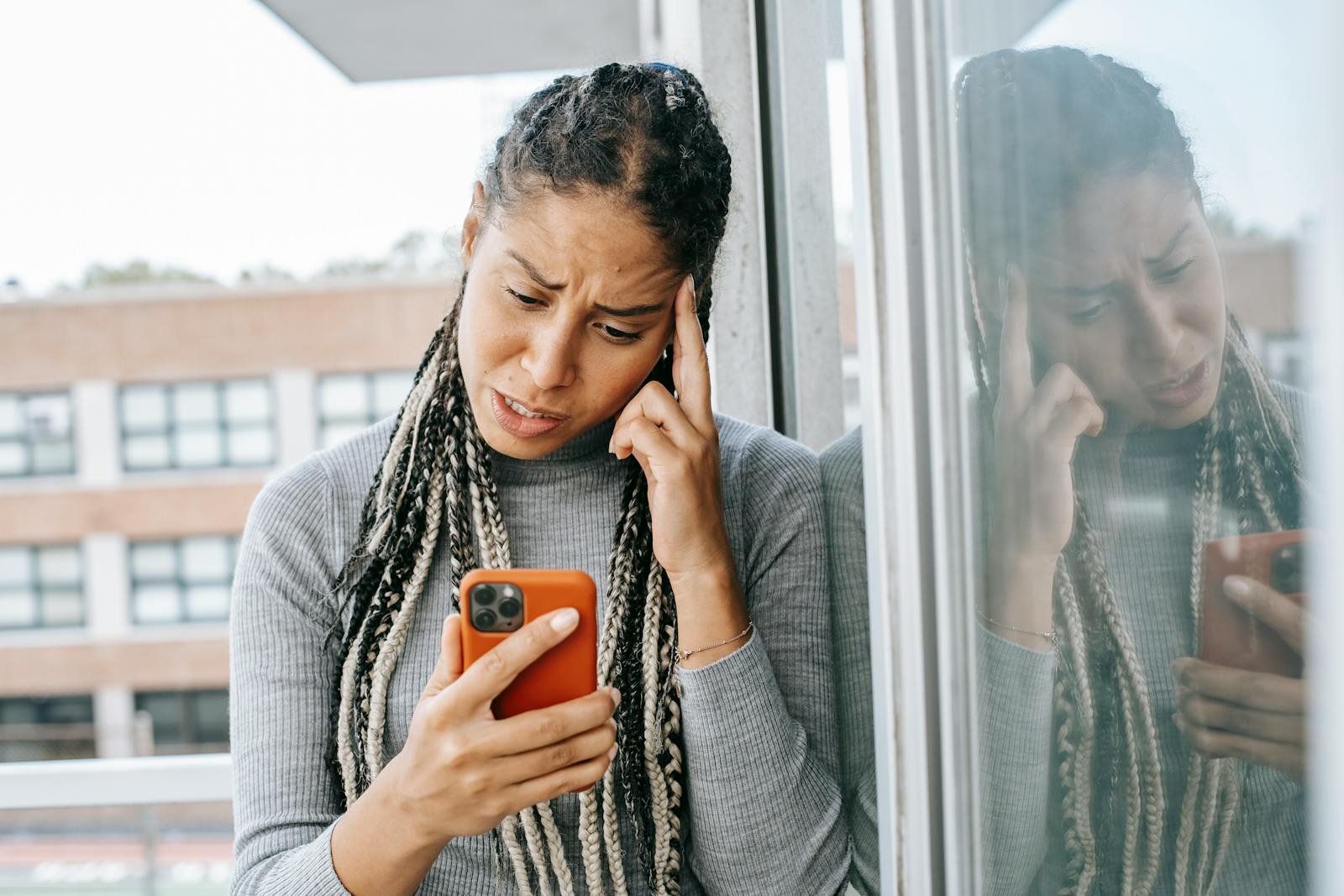
When marketing becomes a disappointment accelerator
An app can have great marketing, beautiful branding, strong visibility. If onboarding is confusing, downloads don't mea…
 Mickael Romaniello
30 minutes, no slides, nothing to prepare.
Mickael Romaniello
30 minutes, no slides, nothing to prepare.
A one-star review is painful. It is also one of the most valuable pieces of market research you will ever receive — completely free, from a real user. Here's how to use it.
Most founders treat a bad app store review as a problem to be managed or a frustration to be vented about. The more productive frame is to treat it as unsolicited market research delivered directly to your inbox. A real user spent time writing about a specific failure in your product. That is enormously valuable data — if you know how to read it.
Bad reviews rarely say exactly what is wrong in technical terms. A user who writes "the app is completely useless" has probably encountered a specific broken flow or a mismatch between their expectation and the product's behavior. Your job is to translate the emotional language of frustration into a precise product diagnosis.
The most important factor in doing this well is looking for patterns rather than reacting to individual reviews. One person complaining about the checkout flow might be an outlier. Ten people mentioning difficulty completing a purchase in a two-week period is a critical signal. App store review monitoring tools allow you to track keyword frequency over time, which turns what feels like noise into a structured dataset of user pain points.
App store responses are public. When you respond thoughtfully to a negative review, you are not just talking to the person who left it — you are demonstrating to every potential user who reads the review that you take your product seriously. A response that acknowledges the issue, explains what you are doing about it, and invites the user to contact you directly for support often converts a vocal critic into a loyal advocate.
The key advantage of a timely, professional response is that it prevents a bad review from becoming the defining impression of your app. Users understand that software has bugs. They are less forgiving of silence or defensiveness. A company that says "you are right, here is what we fixed" earns far more trust than one that disappears after launch.
The highest value you can extract from a negative review is a product improvement. When a review identifies a real failure in your app — a flow that is confusing, a feature that is missing, a performance problem under specific conditions — and you ship a fix, that review has done more for your product than most user research sessions would have.
I build lightweight feedback loops into every product I work on: in-app feedback mechanisms, App Store review monitoring, and a structured process for triaging user reports against the product roadmap. The goal is to make sure user pain points reach the development cycle before they reach the review section of the store.
Want a product that gets better with every user interaction? Let's build that feedback loop together.
12 years of experience, iOS + Android, one dedicated contact. Free 30-minute call to scope your need — no commitment, no jargon.
Book a call →
Most founders treat a bad app store review as a problem to be managed or a frustration to be vented about. The more productive frame is to treat it as unsolicited market research delivered directly to your inbox. A real user spent time writing about a specific failure in your product. That is enormously valuable data — if you know how to read it.
Bad reviews rarely say exactly what is wrong in technical terms. A user who writes "the app is completely useless" has probably encountered a specific broken flow or a mismatch between their expectation and the product's behavior. Your job is to translate the emotional language of frustration into a precise product diagnosis.
The most important factor in doing this well is looking for patterns rather than reacting to individual reviews. One person complaining about the checkout flow might be an outlier. Ten people mentioning difficulty completing a purchase in a two-week period is a critical signal. App store review monitoring tools allow you to track keyword frequency over time, which turns what feels like noise into a structured dataset of user pain points.
App store responses are public. When you respond thoughtfully to a negative review, you are not just talking to the person who left it — you are demonstrating to every potential user who reads the review that you take your product seriously. A response that acknowledges the issue, explains what you are doing about it, and invites the user to contact you directly for support often converts a vocal critic into a loyal advocate.
The key advantage of a timely, professional response is that it prevents a bad review from becoming the defining impression of your app. Users understand that software has bugs. They are less forgiving of silence or defensiveness. A company that says "you are right, here is what we fixed" earns far more trust than one that disappears after launch.
The highest value you can extract from a negative review is a product improvement. When a review identifies a real failure in your app — a flow that is confusing, a feature that is missing, a performance problem under specific conditions — and you ship a fix, that review has done more for your product than most user research sessions would have.
I build lightweight feedback loops into every product I work on: in-app feedback mechanisms, App Store review monitoring, and a structured process for triaging user reports against the product roadmap. The goal is to make sure user pain points reach the development cycle before they reach the review section of the store.
Want a product that gets better with every user interaction? Let's build that feedback loop together.
12 years of experience, iOS + Android, one dedicated contact. Free 30-minute call to scope your need — no commitment, no jargon.
Book a call →We write about mobile app development, user experience design, App Store optimization, project management, and industry trends. Our articles are based on real experience from client projects.
We aim to publish regularly with a focus on quality over quantity. Each article is written from hands-on experience, not generic advice.
Absolutely! Feel free to reach out via our contact page or book a consultation. We love hearing what questions our readers and clients have.
Most of my projects run remotely, and in practice that changes very little. We talk over video whenever you need to, not only at major milestones, and you can reach me with questions at any point during the project — I always answer.
You can also write to me directly on WhatsApp: same number I use every day, a French professional line that works internationally.