 Mickael Romaniello
30 minutes, no slides, nothing to prepare.
Mickael Romaniello
30 minutes, no slides, nothing to prepare.
Mickael Romaniello
30 minutes, no slides, nothing to prepare.
Mickael Romaniello
30 minutes, no slides, nothing to prepare.

One single point of contact, from concept to publication. Building apps since 2013. 15+ apps delivered.
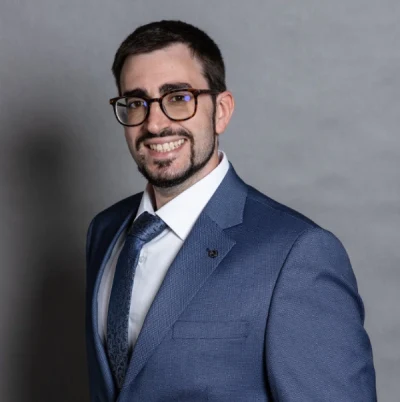
In short: I build iOS and Android apps for clients in Los Angeles (3,979,576 residents) and across California. One single point of contact, building apps since 2013, delivery from concept to publication in 8 to 16 weeks.
3,979,576 people live in Los Angeles.
And if you look around you on the streets, in the coffee shops, or on public transit across California, you will notice a very simple fact. Everyone is glued to their smartphone.
This is no longer just a trend. It is the absolute standard of our United States.
Today, most global web traffic comes from mobile devices. And that number is only going up. Yet, many businesses in Los Angeles continue to operate with basic websites, often slow and poorly adapted to small screens.
Spoiler: if loading exceeds three seconds, the user is gone. They click. They quit. They forget. 📱
You want to launch a digital project in Los Angeles. You meet with developers, and suddenly they are throwing words at you like frontend, backend, APIs, and databases.
You nod your head, but honestly, you are lost.
Forget the technical jargon. Building a mobile application is exactly like opening a restaurant in California. It is a precise mechanism where every single element plays a vital role.
Let's imagine your app as this famous restaurant.
The frontend is the dining room. It is the decor, the tables, the menu presentation, the ambiance. It is the actual app your users download to their phones. This frontend must be beautiful, welcoming, and follow strict standards, like Apple's Human Interface Guidelines. If the dining room is ugly, the customer will not enter.
Next, there is the API. The API is the waiter. The customer gives them their order. The waiter runs to the kitchen to pass on the information, then comes back with the hot plate of food. Without the waiter, the dining room and the kitchen cannot communicate.
Based in Cannes, I work with clients all over France and internationally. But distance changes nothing about my level of commitment.
Since 2013, I've been creating iOS and Android apps for SMBs and startups by putting human connection first. I immerse myself in your projects as if they were my own. You have my direct number, we call each other when needed, and we move forward together.
The most important factor for a successful application comes first from a great human relationship. That is the core of my approach.
The economy in Los Angeles is evolving fast. Very fast.
Local businesses can no longer settle for a basic, aging website. Digital transformation is happening everywhere across California. And mobile devices have become the absolute center of this shift. 🚀
In short: your clients live with their phones in their hands.
It is an unavoidable reality that most global web traffic comes from mobile devices. If your business in Los Angeles is not easily accessible on their home screen, it is practically invisible to a massive chunk of your audience.
I help companies build this vital digital presence. Governments across United States are pushing small and medium businesses to adapt to these new consumer habits, and funding digital growth.
The observation is the same everywhere. The residents of Los Angeles want to order, book, or find information with a single tap, whether they are on their couch or commuting.
Los Angeles brings a lot of media and entertainment work, where the app is one piece of something larger and the brand is already fixed. That is easier than it sounds: when the design language exists, the arguments about colour and type never happen, and the whole conversation stays on what the thing actually does.
It brings its own discipline, though. A brand built for print and film does not always survive contact with a phone. Type set at a weight that looks elegant on a poster can be unreadable at arm's length on a bright screen; a palette with beautiful low-contrast pairings can fail basic accessibility; a logo designed for a title card does not shrink to a tab bar icon. My job on those projects is often to protect the brand from a literal translation of itself, and to propose the smallest adjustments that keep the identity intact while making the screen usable.
Media projects also tend to be heavy with video and images, which is where mobile performance is actually won or lost. Full-resolution assets on a list view make an app that stutters and a data plan that evaporates. The work that matters here is invisible: resizing on the server, loading progressively, caching properly, and never blocking the interface while something downloads. It is unglamorous, and it is the difference between an app people keep and one they delete after a week.
The nine-hour gap means our working days do not really meet — your morning is my evening. That works well with a rhythm of weekly deliverables you review at your desk and I act on overnight, and it works badly with a project that needs live back-and-forth to move. If yours is the second kind, someone in your timezone will serve you better and I will say so rather than take the work.
Invent Better starts by removing, not adding. An app that does one thing properly ships in two months; one that does five things halfway never ships at all. Given that a large share of features planned in advance are never actually used, the useful question is not whether a feature would be nice, but whether anyone still uses the app without it.
In Los Angeles, many developers love to show off long lists of complicated tools. They talk about languages, servers, and databases.
But a programming language is just a paintbrush. What truly matters is how you use it to paint.
Spoiler: a beautiful mobile app without a solid technical architecture is like a sports car without brakes. It is going to crash straight into a wall very fast. 🏎️
The most important factor in my work is reliability. Here is how I build applications that are made to last across California.
You do not need to be in the same office to build an excellent application.
Today, the digital economy in Los Angeles operates without borders. But for remote work to be truly effective, you need military-grade organization. Technical chaos is incredibly expensive.
The key advantage of my approach is absolute transparency. Here is how we will collaborate, even if hundreds or thousands of miles separate us.
Let's start with the tools. There are no black boxes with me.
For design, I work code-first with visual mockups validated with you. For projects requiring specialized UX/UI work, I partner with a trusted designer. You can click through them, leave comments directly on specific buttons, and validate the interface before I ever write a single line of code.
For the code itself, I use GitHub. You have full access to the engine room. You are the sole owner of your product from A to Z.

Nothing beats a concrete example to truly understand. Here is the story of an established service company.
This business had a standard website. Their analytics showed that most their traffic was coming from mobile phones. That is a massive number. But there was a major issue. They were getting absolutely zero bookings from those devices.
Their customers were trying to book appointments, getting lost on the clunky mobile site, and giving up entirely.
The technical challenge was very real. We needed to handle a complex calendar system, secure payments, send push notification reminders, and allow multiple users to coordinate schedules.
The client wanted to build everything at once. A loyalty program, a blog, a forum, and the booking module.
I reminded them of a vital statistic: most app features are never actually used. Why spend thousands of dollars on ghost options?
There is no single price for a mobile app. What sets the amount is the scope: the number of screens, whether it needs a server and user accounts, and whether it targets one platform or two. A scoping call gives a real range.
Three factors set the budget, plus two fixed costs:
The real estate market in Los Angeles is fiercely competitive. If a potential buyer misses a great deal because your mobile site was lagging, they will simply go to your competitor.
A great real estate app is the tool that alerts the buyer before anyone else. We set up geolocated push alerts the very second a new property matches their criteria in California.
We add virtual tours using 360-degree photos that are perfectly fluid, with zero endless loading screens. We even integrate real-time mortgage calculators directly linked to your CRM. The key point: we put the entire real estate agency right in the client's pocket.
In the banking world, security comes way before design. But one does not prevent the other.
Building a financial app for United States means respecting heavy regulations like PSD2 in Europe. It means integrating end-to-end encryption to protect every single transaction. It is the digital equivalent of building an armored cash transport vehicle.
One condition and three criteria. The condition is frequency: an app lives on a home screen, and an icon opened once a year never pays for itself. If your customers come back weekly, one criterion out of three is then enough — it uses the phone itself, it has to work with no network, or it has a legitimate reason to bring people back. Otherwise a website does the same job for less, and I will say so.
An app idea cannot be patented as such; what can be protected is the name — a registered trademark — and the code, covered by copyright from the moment it is written. In practice the risk is almost never theft: it is taking six months to ship while someone else takes two. If it worries you, a non-disclosure agreement can be signed before the first call, without difficulty.
No, and starting without one is healthier. Scoping is about what the app does and for whom; the styling comes after, and it comes out better once the screens are known. If you already have an identity, we use it. If not, the first version can be plain and legible — which is not a fallback: plenty of apps would be better off staying that way.
Yes, and it is often the best money in the project. Clickable mockups put in front of ten people reveal in a week what a three-month build would reveal too late. You see where people hesitate, what they cannot find, what they do not care about. It is also what lets you remove features before paying for them rather than after.
Yes, always, and this is the one point I do not bend on. Both accounts are paid and created under your company's name; I work on them with delegated access. An app published under a provider's account is an app you do not control: you can neither update it nor transfer it without them. Apple's side takes a while to set up, so start early.
As late as possible. A sign-up screen on opening is the first cause of abandonment: the person has seen nothing yet and you are already asking for something. The good rule is to let them try, then ask for an account when it becomes useful — to find their data on another device, to pay, to be recognised. Plenty of apps gain users simply by moving that screen.
The simple rule: collect only what you actually use, say so plainly, and let people undo it. In practice that means a readable privacy policy, consent asked at the right moment rather than in one block at launch, and a way to delete an account from inside the app — Apple requires it. The privacy labels on both stores also have to match what the app really does.
Yes, and there is a rule to know before building a business model on it: anything consumed inside the app goes through Apple's or Google's payment system, which takes a commission. Selling a service consumed elsewhere — physical work, a delivered order — is charged normally. The difference is not a detail; it changes the price you need to display.
Nothing. No specification, no deck, no fixed budget. Thirty minutes is enough if you can answer two questions: who is going to use it, and what does it save them. If you have screenshots of apps you like, bring them — showing what you like is faster than describing it. The rest is my job to ask.
Three signals, and I say them on the call rather than in the third month. If nobody on your side can answer my questions during the build, it will not move. If the budget covers the build but nothing of the following year, the app will die quietly. And if the goal is to reassure an investor rather than serve a user, a mockup costs a hundred times less and does the same job.
Ready to launch your app in Los Angeles?
You have the idea. You know your market in California. Now, it is time to take action.
But not just in any random way. The key advantage of working together is absolute clarity. I will not sell you useless features. I will not make empty promises that I cannot keep.

In 30 minutes, you will know exactly where to start.
Book a free call →30 minutes to start your project
Book a free call →Most of my projects run remotely, and in practice that changes very little. We talk over video whenever you need to, not only at major milestones, and you can reach me with questions at any point during the project — I always answer.
Once we are working together, travelling to meet you on site can absolutely be arranged if your project calls for it. Travel costs are quoted separately, upfront and with no surprises.