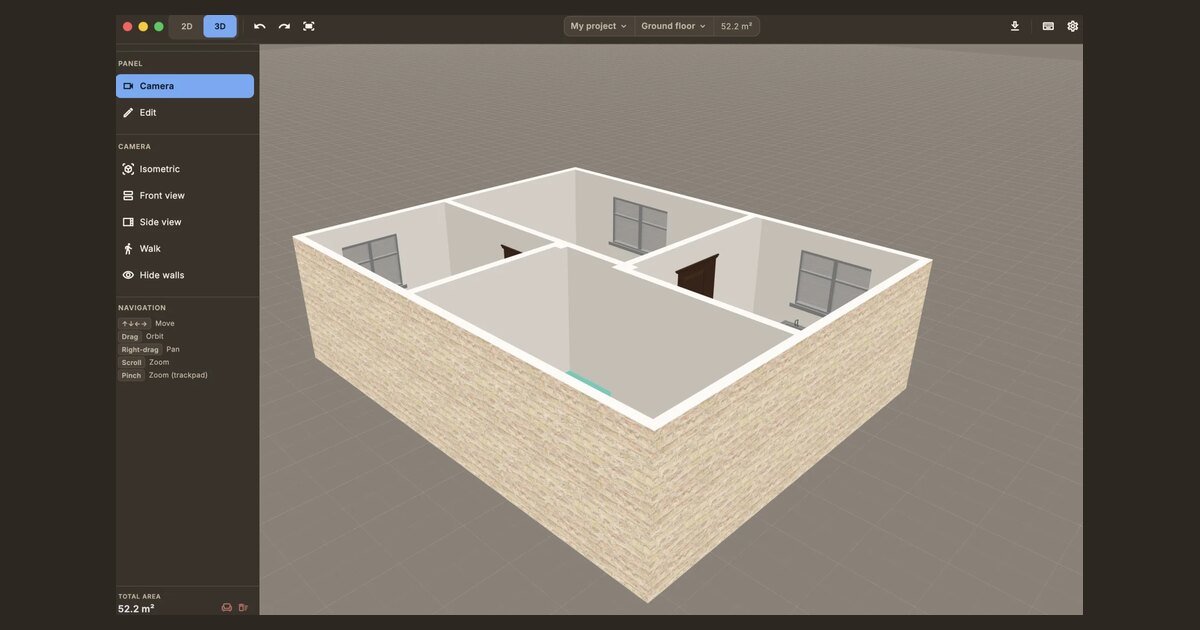
A Mac app and its web version: what the second one really costs
Sharing code between a desktop app and its browser version does not halve the work. Here is what the second platform ac…
 Mickael Romaniello
30 minutes, no slides, nothing to prepare.
Mickael Romaniello
30 minutes, no slides, nothing to prepare.
Bugs are inevitable. The real question is how you handle them. A well-managed bug can actually strengthen user trust.
There is an absolute truth that all app creators refuse to admit at first. No matter how much budget you invest, your product will inevitably encounter technical problems. Servers sometimes go down and mobile networks are often unreliable. The illusion of technological perfection is a myth that must be abandoned very quickly.
The real question is not whether an error will occur someday. The only strategic question is how you will handle that frustration for the customer. According to Statista (2024), 88% of users abandon an app after a poor unresolved experience.
Most apps handle these weak moments with completely unintentional contempt. When a payment fails or a page refuses to load, the screen freezes abruptly. Sometimes the system displays an obscure message like "Error 404" or "Null Pointer Exception". For a novice user, this computer language is not only incomprehensible but also frightening.
They immediately wonder if they clicked the wrong button by accident. They fear they have been charged twice or have permanently deleted their own file. This lack of clarity generates immediate stress that destroys your premium brand image.
As a Product Engineer, I consider error handling an absolute priority. It is during these moments of crisis that you prove the true professionalism of your company.
The key point: the first golden rule is to always take full responsibility for the technical failure. The user should never feel guilty for having caused the malfunction. We replace frightening error codes with human, simple and very reassuring phrases. A message like "Our system is temporarily slowed down" instantly calms the customer's worries.
Apple's Human Interface Guidelines recommend always providing a clear error message with a possible action. Google's Material Design guide also emphasizes the importance of human language in error messages.
Next, it is vital to provide clear context about the current state of the problem. If the customer's internet connection has been cut, you need to tell them gently. Saying "It seems you are in an area without network" helps them understand the situation. But transparency alone is not enough to save a compromised user experience. You absolutely must offer an escape route or an alternative action to your stuck customer.
A visual dead-end is the worst thing you can inflict on a busy user. If a document download fails, offer a button to retry the operation immediately. If an entire service is under maintenance, offer to send an alert as soon as everything is back up. The goal is to maintain the dialogue and keep total control over the situation.
This attention to invisible details transforms a frustration into a moment of relief. The customer realizes that your product was designed with immense care and great thoughtfulness.
Paradoxically, a well-handled error often increases overall trust in your company. Users very easily forgive a technical problem if the support is impeccable and sincere. According to Statista (2024), apps that offer a clear error recovery system see their average rating increase by 0.5 stars on the stores.
This is the digital empathy that differentiates a standard app from a truly premium service. Anticipating failures is an integral part of intelligent design that is resolutely focused on the future.
Want to offer a reassuring and professional experience to your future mobile customers? Book a 30-minute call with me to calmly audit the resilience of your project.
Building apps since 2013, iOS + Android, one dedicated contact. Free 30-minute call to scope your need — no commitment, no jargon.
Book a call →
There is an absolute truth that all app creators refuse to admit at first. No matter how much budget you invest, your product will inevitably encounter technical problems. Servers sometimes go down and mobile networks are often unreliable. The illusion of technological perfection is a myth that must be abandoned very quickly.
The real question is not whether an error will occur someday. The only strategic question is how you will handle that frustration for the customer. According to Statista (2024), 88% of users abandon an app after a poor unresolved experience.
Most apps handle these weak moments with completely unintentional contempt. When a payment fails or a page refuses to load, the screen freezes abruptly. Sometimes the system displays an obscure message like "Error 404" or "Null Pointer Exception". For a novice user, this computer language is not only incomprehensible but also frightening.
They immediately wonder if they clicked the wrong button by accident. They fear they have been charged twice or have permanently deleted their own file. This lack of clarity generates immediate stress that destroys your premium brand image.
As a Product Engineer, I consider error handling an absolute priority. It is during these moments of crisis that you prove the true professionalism of your company.
The key point: the first golden rule is to always take full responsibility for the technical failure. The user should never feel guilty for having caused the malfunction. We replace frightening error codes with human, simple and very reassuring phrases. A message like "Our system is temporarily slowed down" instantly calms the customer's worries.
Apple's Human Interface Guidelines recommend always providing a clear error message with a possible action. Google's Material Design guide also emphasizes the importance of human language in error messages.
Next, it is vital to provide clear context about the current state of the problem. If the customer's internet connection has been cut, you need to tell them gently. Saying "It seems you are in an area without network" helps them understand the situation. But transparency alone is not enough to save a compromised user experience. You absolutely must offer an escape route or an alternative action to your stuck customer.
A visual dead-end is the worst thing you can inflict on a busy user. If a document download fails, offer a button to retry the operation immediately. If an entire service is under maintenance, offer to send an alert as soon as everything is back up. The goal is to maintain the dialogue and keep total control over the situation.
This attention to invisible details transforms a frustration into a moment of relief. The customer realizes that your product was designed with immense care and great thoughtfulness.
Paradoxically, a well-handled error often increases overall trust in your company. Users very easily forgive a technical problem if the support is impeccable and sincere. According to Statista (2024), apps that offer a clear error recovery system see their average rating increase by 0.5 stars on the stores.
This is the digital empathy that differentiates a standard app from a truly premium service. Anticipating failures is an integral part of intelligent design that is resolutely focused on the future.
Want to offer a reassuring and professional experience to your future mobile customers? Book a 30-minute call with me to calmly audit the resilience of your project.
Building apps since 2013, iOS + Android, one dedicated contact. Free 30-minute call to scope your need — no commitment, no jargon.
Book a call →We write about mobile app development, user experience design, App Store optimization, project management, and industry trends. Our articles are based on real experience from client projects.
We aim to publish regularly with a focus on quality over quantity. Each article is written from hands-on experience, not generic advice.
Absolutely! Feel free to reach out via our contact page or book a consultation. We love hearing what questions our readers and clients have.
Most of my projects run remotely, and in practice that changes very little. We talk over video whenever you need to, not only at major milestones, and you can reach me with questions at any point during the project — I always answer.
You can also write to me directly on WhatsApp: same number I use every day, a French professional line that works internationally.