 Mickael Romaniello
30 minutes, no slides, nothing to prepare.
Mickael Romaniello
30 minutes, no slides, nothing to prepare.
Mickael Romaniello
30 minutes, no slides, nothing to prepare.
Mickael Romaniello
30 minutes, no slides, nothing to prepare.
12 years of experience. 15+ apps delivered. One dedicated point of contact.

In short: I build iOS and Android apps for clients in London (8,982,000 residents) and across England. One single point of contact, 12 years of experience, delivery from concept to publication in 8 to 16 weeks.
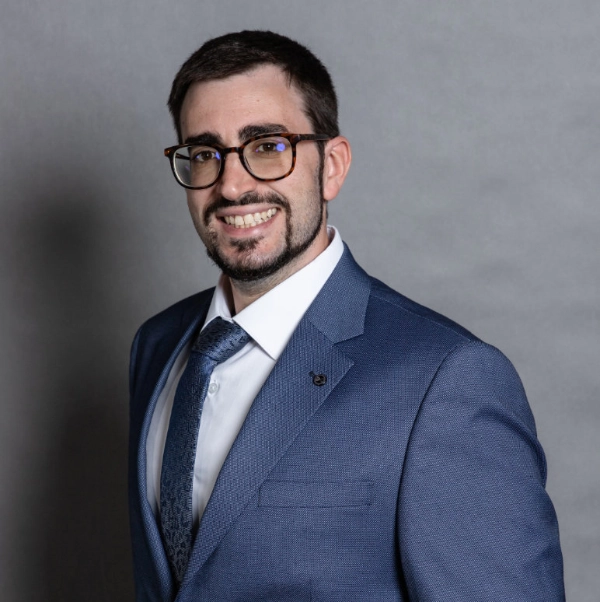
I build mobile applications the way a craftsman builds a house. With solid foundations.
I've been doing this job for 12 years from Cannes, designing iOS and Android apps meant to last. I refuse sloppy work. The key advantage of this method? Your application won't collapse at the first Apple or Google update.
I create clean tools that are easy to maintain and ready to evolve alongside your SMB or startup. Work done with care is a profitable investment for the long run.
You are based in London and you have a mobile app idea.
It is the classic scenario. Enthusiasm is at its peak. You are already picturing your logo on everyone's home screen across England.
The journey between an idea on a napkin and a published app on the stores is long. Very long.
Spoiler: the vast majority of app projects never reach profitability. Not because the initial idea was bad, but because the execution was a mess.
How do we actually build an application in London? It is not just a developer locked in a basement typing random code. It is an industrial, creative, and highly rigorous process.
If you want your project to survive in England, you must follow four major manufacturing steps.
Here is how it really happens.
The first step is concept validation. What precise problem does your application solve? For whom? You must be able to answer in a single sentence. If it is too vague, that is a bad sign. Spoiler: trying to build a Swiss Army knife is a fatal mistake. Knowing that most app features are never actually used, we are going to prune your idea to keep only the pure value.
The second step is technical architecture and design. Before building a house in London, you draw blueprints. It is exactly the same here. We choose the right engine for your app, whether that is native code like Swift or Kotlin, or hybrid tech like Flutter. We design the screens following strict ergonomic rules, taking inspiration from standards like Google's Material Design. We build solid foundations before we start painting the walls.

London is one hour behind me, which in practice means we work the same day — a question at ten is answered by eleven. It is the closest thing to working with someone in the same office that remote work allows, and it is why most of my English-language projects have been British ones.
That overlap is worth more than it sounds. On a project spread across a real timezone gap, a single misunderstanding costs a day: you ask, you wait, you get an answer that reveals a second question, you wait again. With London, the same exchange happens over a coffee break. Over a three-month build, that difference is not a convenience, it is several weeks of calendar time that never get lost to waiting.
London projects tend to arrive further along than most. People have usually done market research, sometimes have a designer already engaged, and often have a clear view of who the app is for. That makes my job narrower and more useful: not deciding what to build, but saying honestly what each part costs, which pieces can wait, and where the design as drawn will fight the platform rather than work with it.
The one thing worth settling early on any UK project is where the data lives and which rules apply to it. Since the UK left the EU it maintains its own data protection regime alongside GDPR, and if your users are spread across both, you are working under both. I am not your lawyer and will not pretend to be, but the practical consequences land in the architecture — where the database sits, what gets logged, how long records are kept — and those are decisions that are cheap on day one and expensive after launch.
You are launching your project in London.
And you are probably wondering who to work with to build your mobile app.
It is the first major decision you have to make. Some people think that to succeed, you absolutely need a big agency right around the corner. Others believe they should outsource to the cheapest team they can find overseas.
Both options come with serious tradeoffs.
A big agency will assign your project to a junior developer you have never met. An offshore team will deliver code you cannot read, three weeks behind schedule, with zero accountability.
The most important factor in the success of an app is not just the code. It is communication.
When you work with me, you get one dedicated expert with 12 years of experience and over 15 delivered projects. Not an account manager. Not a rotating team. One person who knows your project inside out.

With Invent Better, the person who understands your project is the person who writes it. No sales representative, no account manager in between, no handover between three teams. You talk to the developer from the first call through to launch. On a first product, where most of the decisions are made in the first six weeks, that proximity is worth weeks of calendar time.
You have a project in London. And you are wondering what tools we will use to build your application.
Tech jargon can be intimidating.
I am not going to drown you in incomprehensible technical terms. My role is to choose the absolute best engine for your project in England.
Here are the technologies I use every day, explained simply. 🛠️
You do not need to be in the same office to build an excellent application.
Today, the digital economy in London operates without borders. But for remote work to be truly effective, you need military-grade organization. Technical chaos is incredibly expensive.
The key advantage of my approach is absolute transparency. Here is how we will collaborate, even if hundreds or thousands of miles separate us.
Let's start with the tools. There are no black boxes with me.
For design, I work code-first with visual mockups validated with you. For projects requiring specialized UX/UI work, I partner with a trusted designer. You can click through them, leave comments directly on specific buttons, and validate the interface before I ever write a single line of code.
For the code itself, I use GitHub. You have full access to the engine room. You are the sole owner of your product from A to Z.
Imagine a well-known e-commerce brand. This company had a responsive website, supposedly adapted for mobile phones.
Their mobile traffic accounted for most their total visits. It was their main digital storefront. But the mobile conversion rate was a dismal 1.a large share, compared to 3.a large on desktop. They were literally losing money every single day.
The problem was obvious. The checkout flow was an absolute nightmare of friction.
There were too many steps to pay. The buttons were tiny. The page loading was slow. And customers had to manually enter their credit card numbers for every single order.
We know that most mobile users abandon a page if loading exceeds 3 seconds. The penalty was immediate.
The solution was to build a true native application. We completely redesigned the experience, leveraging standards like Google's Material Design for Android to ensure flawless navigation.
If price is your only criterion, we are probably not a good fit, and saying so early saves us both time. A cheap build is rarely cheaper overall: code written without structure becomes impossible to change, so the second version costs more than the first would have. What you are really buying is the ability to keep changing the app after launch.
If price is your one and only criterion for choosing a developer in London, we are probably not a good fit to work together.
This is not arrogance. It is honesty.
Let's talk about the true value of things in our United Kingdom.
The healthcare sector leaves absolutely no room for error. Building a medical app for patients or doctors in England is not just about coding a pretty interface. It is about building a digital vault.
You have to seamlessly manage patient follow-ups, appointment bookings, medication reminders, and secure messaging. Strict compliance with data protection laws is non-negotiable. That is why we integrate heavy biometric authentication systems.
And let's not forget offline mode, which is absolutely vital for a rural doctor consulting in an area with poor signal.
If you are targeting travelers visiting London, your application must be their ultimate guide. And a guide that stops working the moment you cross a border is completely useless.
Offline mode is a matter of survival here to help your customers avoid roaming charges. They must be able to check a real-time itinerary or scan a QR code ticket even without an internet connection.
Our collaboration is a large remote via high-quality video calls. Remote work has become the absolute standard for peak efficiency. No more wasting hours in transit. For very large-scale projects exceeding a certain budget threshold, I can travel to London to lead in-person kickoff workshops. But on a daily basis, we communicate instantly via your preferred channel (WhatsApp, Slack, or email), we validate design mockups together, and we do our project reviews over Google Meet, WhatsApp, or Telegram. It is faster, much more direct, and significantly more cost-effective for everyone involved.
It is absolutely not mandatory. In reality, I greatly prefer to start with a simple fifteen-minute video call. Many clients waste months writing fifty-page specification documents that become entirely obsolete by the second week of development. The most important factor is defining the core problem you are trying to solve in England. Then, we build those exact specifications together, using an agile approach, basing our decisions on actual user needs rather than wild, untested theories.
I have delivered over fifteen major projects across highly varied sectors: healthcare, tourism, e-commerce, logistics, and education. Even if I have not yet worked in your highly specific micro-niche, the fundamental principles of building a robust mobile application are totally universal. The high-quality standards remain exactly the same. What changes is your local business logic. My role is to deeply understand that business logic during our discovery call and translate it into an unstoppable technical solution for your customers.
Payment is broken down into three clear milestones, with absolutely zero surprises. Typically, it is a a large upfront deposit to lock the schedule, a large midway through development when I deliver a testable working version, and the remaining a large upon final delivery to the app stores. For very large, multi-month projects, I smooth the payments out monthly. Everything is detailed in writing within the initial estimate, and I never bill hidden hours for last-minute tweaks.
My weekly demonstrations make this situation practically impossible. You do not just discover the finished product six months after signing the contract. Every two weeks, I show you a fully functional version. You provide your direct feedback from London, and I adjust our aim immediately. If we start heading in the wrong direction, we know it after seven days, not at the end of the year. Plus, if during our first call I feel your expectations are technically unfeasible, I will tell you honestly. Better to decline than disappoint.
Yes, I do take over rescue projects developed by other freelancers or cheap offshore teams. The mandatory first step is a one-week technical audit. We look under the hood. Then, I draw up a strict action plan: first, we fix the critical bugs that are driving your users away, we consolidate the technical architecture, and only then do we add your new features. This is often much more cost-effective for your business across United Kingdom than tearing it all down to start from scratch.
We use direct, asynchronous, and frictionless channels. For quick daily questions, we use Slack. You can drop me a message whenever a brilliant idea hits you. To validate the visual interface, we review mockups together: you leave your comments directly on the drawn screens. For the codebase, everything is hosted transparently on GitHub. Finally, we do a live thirty-minute video checkpoint every single week. I happily adapt to whatever tools your teams in London are already comfortable using. The ultimate goal is absolute efficiency.
I am based on Central European Time (CET) in Cannes, France. For my European clients, I am fully available during standard business hours, between 10 AM and 6 PM. If you are located on another continent, I adapt with high flexibility. For clients in nearby timezones, we work in full real-time overlap. For clients further afield, I adapt with flexible scheduling and recorded video updates to stay fully in sync. My average response time during the workweek is always under four hours, no matter where you are.
Yes, I offer tailored monthly or annual maintenance contracts. These contracts cover mandatory Apple and Google system updates, patching silent bugs, and live performance monitoring. It is the only way to genuinely protect your investment. The statistics prove it, most users instantly uninstall an app after encountering a single technical crash. We can also include a dedicated bank of hours specifically for creating new, small features over time. The recurring cost is a fraction of the initial build, every year.
The number one mistake is trying to build way too many features at once. Data shows that most functions are entirely ignored by users. Always start lean. The second mistake is choosing your developer based solely on price. A low-cost build will cost you three times as much when you have to rebuild it due to failing architecture. The third mistake is believing an app is "finished" once published. A lack of maintenance kills the absolute best projects. My job is to help you avoid these three traps.
While you hesitate, your competitors in London are moving forward.
The mobile world moves fast. Very fast. Today, most global web traffic comes from mobile devices. If you keep pushing back the creation of your app, someone else will happily take your spot in England.
But be careful, do not confuse speed with haste. Launching an unstable application is the worst possible strategy.
In short: you have to act fast, but above all, you have to do it right. ⏳
30 minutes to start
Book →Most of my projects run remotely, and in practice that changes very little. We talk over video whenever you need to, not only at major milestones, and you can reach me with questions at any point during the project — I always answer.
Once we are working together, travelling to meet you on site can absolutely be arranged if your project calls for it. Travel costs are quoted separately, upfront and with no surprises.