 Mickael Romaniello
30 minutes, no slides, nothing to prepare.
Mickael Romaniello
30 minutes, no slides, nothing to prepare.
Mickael Romaniello
30 minutes, no slides, nothing to prepare.
Mickael Romaniello
30 minutes, no slides, nothing to prepare.
12 years of experience. 15+ apps delivered. One single point of contact, from concept to App Store and Google Play publication.
In short: for your New York (8,336,817 residents) project, you work directly with me, not a middleman. 12 years of experience, 15+ apps delivered, and a transparent end-to-end process.
New York is a true hub of innovation in New York.
Ideas are flying, projects are launching, and the competition is fierce. Whatever your industry, there is a very high chance your direct competitors are already thinking about their own mobile app. Or worse, they have already launched it. 🚀
In such a crowded market, whoever offers the smoothest user experience wins the game.
In short: innovation is no longer an option,
Many project founders in New York waste time hesitating. They push back development month after month. But the market in United States does not wait.
How do we actually build an application in New York? It is not just a developer locked in a basement typing random code. It is an industrial, creative, and highly rigorous process.
If you want your project to survive in New York, you must follow four major manufacturing steps.
Here is how it really happens.
The first step is concept validation. What precise problem does your application solve? For whom? You must be able to answer in a single sentence. If it is too vague, that is a bad sign. Spoiler: trying to build a Swiss Army knife is a fatal mistake. Knowing that most app features are never actually used, we are going to prune your idea to keep only the pure value.
The second step is technical architecture and design. Before building a house in New York, you draw blueprints. It is exactly the same here. We choose the right engine for your app, whether that is native code like Swift or Kotlin, or hybrid tech like Flutter. We design the screens following strict ergonomic rules, taking inspiration from standards like Google's Material Design. We build solid foundations before we start painting the walls.
The key point: the price depends on the technical complexity under the hood, not on the number of pages.
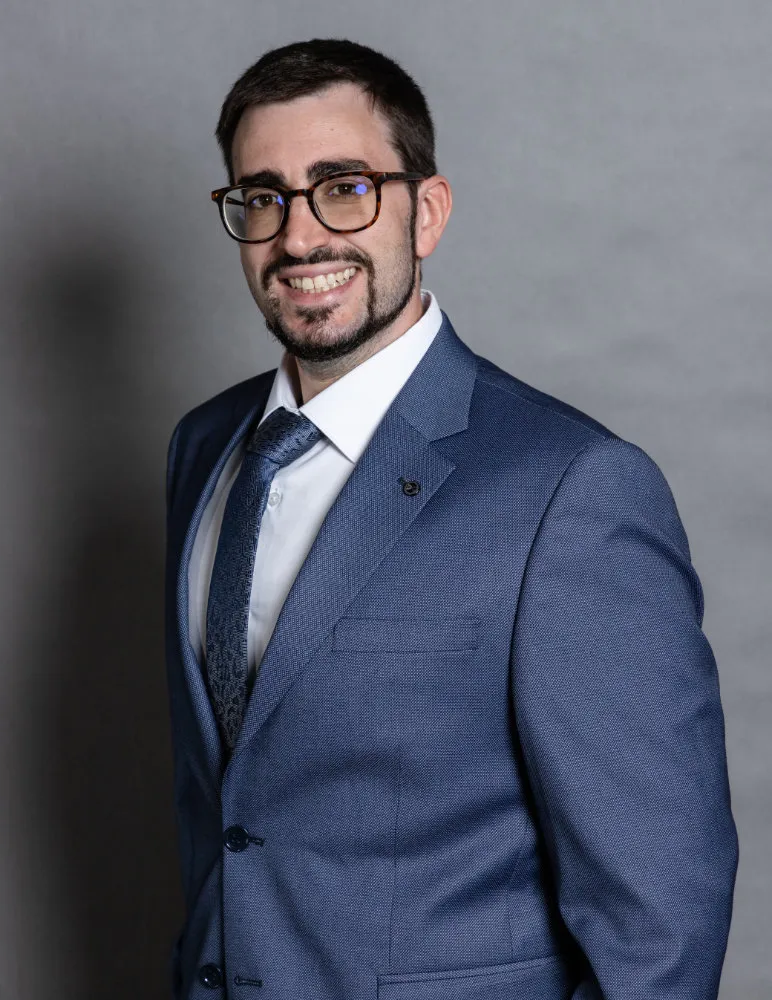
I am not just a developer. I am also the guy who will tell you when a feature is a bad idea.
In 12 years of experience, I've seen too many projects fail because of overly complicated apps. My approach from Cannes? We keep it simple. I work with startups and SMBs to build iOS and Android apps that get straight to the point.
I am your product partner. If an idea doesn't serve your users, I will tell you. In short: it's a matter of trust.
The economy in New York is evolving fast. Very fast.
Local businesses can no longer settle for a basic, aging website. Digital transformation is happening everywhere across New York. And mobile devices have become the absolute center of this shift. 🚀
In short: your clients live with their phones in their hands.
It is an unavoidable reality that most global web traffic comes from mobile devices. If your business in New York is not easily accessible on their home screen, it is practically invisible to a massive chunk of your audience.
I help companies build this vital digital presence. Governments across United States are pushing small and medium businesses to adapt to these new consumer habits, and funding digital growth.
The observation is the same everywhere. The residents of New York want to order, book, or find information with a single tap, whether they are on their couch or commuting.
New York clients tend to arrive with the product already decided and a date attached to it. That is workable, but the date is the thing to be honest about first: an App Store review is not something either of us controls, and planning a launch without a week of slack in it is how a good build turns into a bad launch.
Review is the part people underestimate because it is invisible until it bites. Most submissions clear in a day or two, some take a week, and a rejection over something small — a missing privacy declaration, an account you cannot delete from inside the app, a sign-in option that Apple requires alongside yours — sends you back to the end of the queue. None of those are hard to fix. All of them are expensive on the Tuesday before a launch event, which is why I check them weeks earlier rather than at submission.
The six-hour difference is the other structural fact. Your morning is my afternoon, which gives us roughly three hours of genuine overlap every day. That is enough for a daily question and a weekly call, and it is not enough for a project that needs constant conversation. The pattern that works is a written decision log and a build you can install on your own phone every week — you review in your morning, I act on it in mine, and nothing waits a full day for an answer.
One more thing specific to New York: I am often not the only person quoting. Agencies here will present a team, a process and an account manager, and they are not lying about what that buys. What it does not buy is the person writing the code sitting in the conversation where the decision is made. On a first product, where most of the important choices are made in the first six weeks, that proximity is usually worth more than the headcount.
The work does not stop at publication. An app lives on systems that keep moving: iOS and Android each ship a major release every year, and an unmaintained app is eventually pulled from the stores. Invent Better plans for that in the original quote, rather than presenting it as a surprise six months after launch.
There is a very dangerous myth in the software industry. The belief that the work is completely finished the day your app goes live on the stores.
You push the launch button, the application becomes available in New York, everyone drinks champagne, and the development agency completely vanishes to work on their next client.
That is the absolute worst thing that can happen to your business.
A mobile application is not a painting that you hang on a wall and never touch again. It is a living, breathing organism.
Operating systems update constantly. Apple and Google change their strict security guidelines. Brand new devices with weird screen sizes hit the market every single month. And your users constantly change their habits.
A project runs in four stages: scoping that decides what goes into the first version, mockups you handle before a line of code exists, development delivered in installable slices, then publication. What matters is not the number of stages but their rhythm.
Four stages, in this order:
A transparent, iterative process with zero surprises. You see the app grow every single week.
Imagine a well-known e-commerce brand. This company had a responsive website, supposedly adapted for mobile phones.
Their mobile traffic accounted for most their total visits. It was their main digital storefront. But the mobile conversion rate was a dismal 1.a large share, compared to 3.a large on desktop. They were literally losing money every single day.
The problem was obvious. The checkout flow was an absolute nightmare of friction.
There were too many steps to pay. The buttons were tiny. The page loading was slow. And customers had to manually enter their credit card numbers for every single order.
We know that most mobile users abandon a page if loading exceeds 3 seconds. The penalty was immediate.
The solution was to build a true native application. We completely redesigned the experience, leveraging standards like Google's Material Design for Android to ensure flawless navigation.
In short: we do not build everything. We build what your users actually need.
If price is your only criterion, we are probably not a good fit, and saying so early saves us both time. A cheap build is rarely cheaper overall: code written without structure becomes impossible to change, so the second version costs more than the first would have. What you are really buying is the ability to keep changing the app after launch.
If price is your one and only criterion for choosing a developer in New York, we are probably not a good fit to work together.
This is not arrogance. It is honesty.
Let's talk about the true value of things in our United States.
The global e-learning market grows every single year. And for good reason: students and professionals in New York want to learn anywhere, at any time.
A solid mobile e-learning platform is not just a messy list of videos. It is the ability to securely download those courses to watch them on the New York subway without burning through a cellular data plan.
You have to add gamification, achievement badges, and streak tracking to maintain high motivation. For schools, we integrate a direct notification system for parents, ensuring that critical information flows completely without friction.
The restaurant industry has radically changed. If your restaurant in New York is not in your regular customers' pockets, you are missing out on massive revenue.
Forget the big delivery platforms that take huge cuts of your margin. The key advantage of having your own application is total control.
It is the question nobody asks a freelancer and the one worth asking first. My answer is three concrete things: the code sits in a repository in your name from day one, decisions are written down rather than kept in my head, and the store accounts are yours. Another developer can pick it up without me. That is not a promise, it is an arrangement — and you can check it in the first week.
You do, entirely, and from the start rather than at the end. The repository is opened in your name, you have access during development, and there is nothing to claim at delivery. The same goes for the designs and the store accounts. The only thing worth discussing is if you want to reuse a component I wrote elsewhere — I say so before using it, not after.
We fix it and resubmit, and that is part of the project. A rejection is not a rare accident: Apple checks dozens of points, and the common reasons are predictable — a test account that does not work, a permission requested with no explanation, an advertised feature that is not there yet. I deal with those before submitting, which guarantees nothing but avoids most of it. You never have to handle the exchange with the reviewer.
Yes, and you should know that before building on one. Apple and Google can remove an app that breaks their rules, and they change those rules regularly. Abrupt removals mostly hit apps that collect data without saying so, copy a brand, or have not been updated in a long time. It is also why a web presence stays useful alongside: nobody can take that one away from you.
It keeps running, and you keep everything needed to keep it alive: the code, the accesses, the signing keys, the documentation. I do a written handover rather than a file transfer — what was built, why, and where the traps are. It is half a day of work that saves whoever comes next several weeks of reverse engineering, and I would rather we parted that way.
Before any quote, there is a list to gather: the code repository, the App Store Connect and Google Play accounts — in your name, not the provider's — the Android signing key, and access to the hosting and database. The signing key is the critical piece: without it, the app can no longer be updated, it has to be republished under a new identifier, and you start again from zero installs.
Wherever you decide, and it is a decision to take early because it is expensive to undo. For most projects a European host is enough and keeps GDPR simple. For health data the hosting has to be certified, which narrows the choice and weighs on the budget — better learned on the first call than on launch day. In every case, the accounts are in your name.
I know before you see the review. A crash reporting tool sends the error with the device, the OS version and the exact place in the code — with no personal data. Without it, you discover bugs through store reviews, which is to say too late and in public. It is one of the few things I set up on every project, however small, because it costs almost nothing and changes everything.
On the code side, yes: every released version is tagged and we can return to the exact state of a delivery. On the store side it is more nuanced — Google lets you halt a rollout, Apple expects a fix to be published. The real protection is upstream: a staged rollout on Android, a real testing phase, and updates small enough that you know what broke.
It works, then it degrades slowly, and one day it stops launching. iOS ships a major version every September, Android every year, and each one breaks something. An app left alone for eighteen months usually costs more to bring back than the maintenance would have. You can stop — it is your call and I will not bill you a subscription for nothing — but decide it knowingly.
While you hesitate, your competitors in New York are moving forward.
The mobile world moves fast. Very fast. Today, most global web traffic comes from mobile devices. If you keep pushing back the creation of your app, someone else will happily take your spot in New York.
But be careful, do not confuse speed with haste. Launching an unstable application is the worst possible strategy.
In short: you have to act fast, but above all, you have to do it right. ⏳
In 30 minutes, you will know exactly where to start. No commitment. No technical jargon.
Book a free call →
30 minutes to start your project
Book a free call →Most of my projects run remotely, and in practice that changes very little. We talk over video whenever you need to, not only at major milestones, and you can reach me with questions at any point during the project — I always answer.
Once we are working together, travelling to meet you on site can absolutely be arranged if your project calls for it. Travel costs are quoted separately, upfront and with no surprises.