 Mickael Romaniello
30 minutes, no slides, nothing to prepare.
Mickael Romaniello
30 minutes, no slides, nothing to prepare.
Mickael Romaniello
30 minutes, no slides, nothing to prepare.
Mickael Romaniello
30 minutes, no slides, nothing to prepare.
12 years of experience. 15+ apps delivered. One single point of contact, from concept to App Store and Google Play publication.

In short: for your Birmingham (1,144,900 residents) project in England, you work directly with me, not a middleman. 12 years of experience, 15+ apps delivered, and a transparent end-to-end process.
iOS and Android release 4 to 6 system updates every single year.
Every single one of these updates can break your application overnight.
A payment flow that worked flawlessly yesterday suddenly crashes because Apple changed a core security API. A login screen becomes entirely unusable on the newest Samsung device. Without regular maintenance, your app becomes technically obsolete in a matter of months in Birmingham.
And that is not even the worst part.
If you let your code gather dust, you risk outright eviction from the stores.
The App Store Review Guidelines allow Apple to remove apps that have not been updated in too long. Your entire initial investment disappears with one click.
Forget about code for a minute. Let's use a car analogy to understand the real stakes in Birmingham.
The oil change represents security patches. You do not see the clean oil when you drive. It does not make the car go any faster. But if you skip it, the engine seizes in the middle of the highway. In an app, this is what protects your users' private data.
Rotating your tires represents OS compatibility updates. When Apple or Google release a major system update, the rules of the road change. If your app keeps its old tires, it will crash. We have to adapt the code so it keeps driving straight.
The annual inspection is the technical audit. Once a year in Birmingham, we look under the hood. We analyze load performance, database query speed, code cleanliness, and crash rate trends.
Roadside assistance is the emergency fix. A critical bug blocks all payments on a Friday night? I am on it within hours. We fix it, we restart.
The key point: the price depends on the technical complexity under the hood, not on the number of pages.
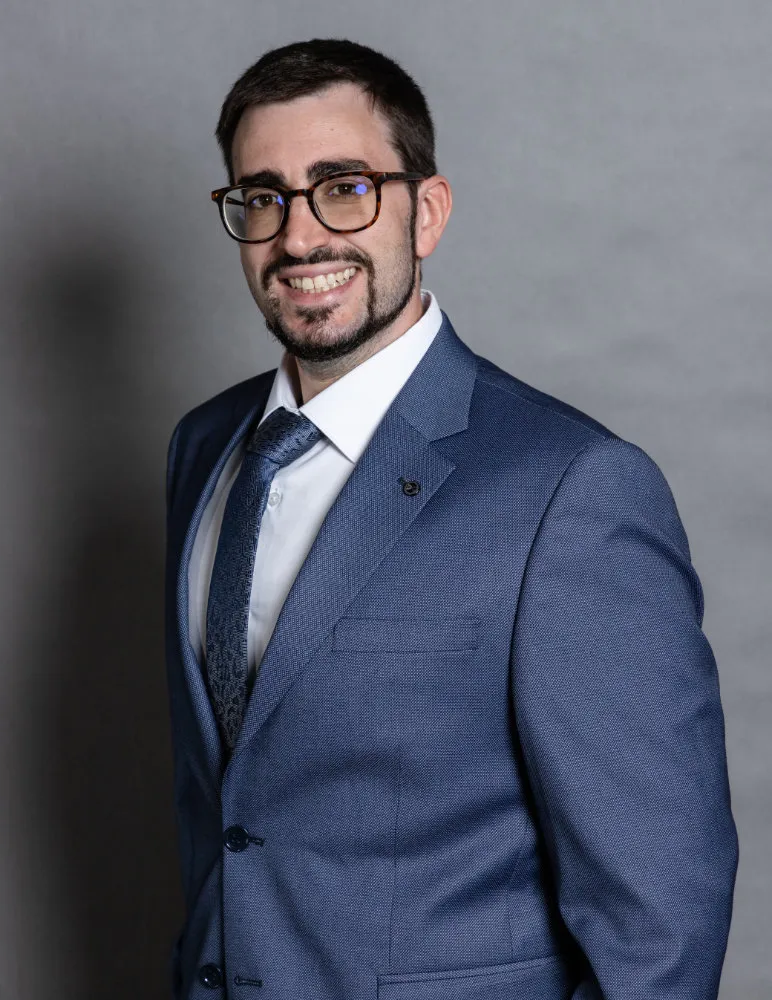
No agency. No sales rep. No project manager standing between us.
When you work with me, you talk directly to the person building your app. For 12 years, I have managed the creation of iOS and Android applications from A to Z from my office in Cannes. That means faster responses, less talk, and zero bad surprises on the invoice.
The key point: we save an incredible amount of time. I advise you, I design, and I develop with total transparency. It really is that simple.
The number one fear when starting an app project is losing control: you sign an estimate, hand over your idea, and hear nothing for three months. The way of working described here exists so that does not happen.
Three rules, the same on every project:
You test the app on your own phone every two weeks.
Birmingham work often comes from businesses with a physical operation behind the app — logistics, retail, trades. Those projects live or die on whether the app works with no signal in a warehouse or a van, and that decision has to be made in week one, because it shapes how everything stores data.
The reason it cannot wait is structural. An app that assumes a connection asks the server for what it needs and shows the answer. An app that works offline keeps its own copy of the data, decides what to do when two people change the same record in different places, and syncs in the background without the user thinking about it. Those are not the same app with a feature added; they are different architectures. Retrofitting the second onto the first is usually a rewrite, and I would rather tell you that in the first meeting than in the fourth month.
Businesses with vans and depots also have a second constraint that catches people out: the phone is not a desk. It is used one-handed, sometimes in gloves, sometimes in rain, often by someone who did not choose the app and does not want to be learning software. That pushes hard toward fewer screens, bigger targets, and as little typing as possible — scanning, picking from a list, or tapping a single obvious button. An app that requires careful input on a loading bay gets filled in later at the desk, from memory, which means your data is wrong.
Birmingham is also a genuinely multilingual city, and for a consumer-facing product that is worth a deliberate decision rather than a default. Shipping in English only is a perfectly reasonable choice; discovering after launch that a third of your intended users struggle with the sign-up form is not. Deciding it at the start costs a conversation. Deciding it afterwards costs a redesign, because screens laid out for English rarely hold a longer language without breaking.
An app can be built fast and cheap. What costs money is what comes next: code written without structure becomes impossible to change, and the smallest new feature means starting over. Invent Better charges for the work that makes a second version possible — tests, a readable architecture, and code another developer can pick up.
It is entirely possible to build a mobile application extremely fast and for very little money.
All you have to do is ignore every best practice, copy and paste random blocks of code from the internet, and cross your fingers hoping it holds together. On the day of your big presentation in Birmingham, the app will probably look fine.
But that thin layer of paint will crack almost immediately.
The second you get more than ten users trying to log in at the same time, the system will crawl to a halt. On mobile devices, user patience is brutally short. And slowness is always perceived as a broken product.
The most common scenario in Birmingham is code takeover. You had an application built by another developer or agency, and today, you are left alone with an unstable product.
I do not judge the past; I secure the future. Here is the takeover methodology:
The Audit: It is like a doctor examining a patient for the very first time. I comb through the code, verify the architecture, analyze the crash data, and read the store reviews.
The Triage: We do not rewrite everything immediately. We prioritize. Security flaws and major crashes come first. Then performance bottlenecks. Finally, the minor interface glitches.
The Stabilization Sprint (2 to 4 weeks): This is the emergency surgery room. I fix the top 10 most critical issues. I install monitoring probes. I add automated tests to the most fragile parts of your application for your customers in England.
Cruising Altitude: Once stabilized, the app enters a standard monthly rhythm. You finally stop stressing out every time your phone rings because of a complaining customer.

A transparent, iterative process with zero surprises. You see the app grow every single week.
A year ago, a local company from England contacted me in a panic. Their mobile app was crashing several times a day. Their store rating had plummeted. Negative reviews were pouring in, and the CEO was seriously considering shutting down the entire project.
Let's look at the facts.
I requested access to the code for a full one-week technical audit. The user interface was actually quite good, and the core idea was solid. The problem came from the foundations: deprecated libraries and terrible memory management.
I did not propose rebuilding from scratch. It was completely unnecessary.
I simply rewrote the critical most the codebase: the authentication flow and the checkout process. I hooked up Crashlytics to monitor what was happening live. I added robust automated tests to protect these specific user journeys.

In short: we do not build everything. We build what your users actually need.
Maintenance is easier to price against the cost of doing nothing. What does one day of downtime cost you? If checkout crashes, that is revenue lost outright. An unmaintained app also drifts out of compatibility with each annual iOS and Android release, and is eventually pulled from the stores.
I refuse to talk about maintenance as a "cost." It is a massive defensive investment for your business in Birmingham.
To understand why, you have to look at the exorbitant price tag of technical inaction:
How much does a single day of downtime cost you? If your e-commerce checkout crashes, that is raw revenue burning in real time. If your booking service goes offline, your customers go straight to the competitor across England.
The long-term survival of an application depends entirely on its ability to handle the specific, heavy usages of its industry in Birmingham.
Content delivery optimization is vital. Video lessons and heavy PDFs can cause the app size to bloat over time. I monitor video streaming performance and the rock-solid reliability of offline downloads for students across England. The parental notification system must also remain perfectly synced through every single iOS and Android update.
The app must be an absolute rock during peak rush hours (12-2 PM and 7-9 PM). Active maintenance ensures the total reliability of the order flow under heavy server load. I track GPS API accuracy for delivery drivers, and I maintain the fragile technical bridges between the mobile app and the restaurant's Point of Sale (POS) software. A bug here destroys the dinner service.
One condition and three criteria. The condition is frequency: an app lives on a home screen, and an icon opened once a year never pays for itself. If your customers come back weekly, one criterion out of three is then enough — it uses the phone itself, it has to work with no network, or it has a legitimate reason to bring people back. Otherwise a website does the same job for less, and I will say so.
An app idea cannot be patented as such; what can be protected is the name — a registered trademark — and the code, covered by copyright from the moment it is written. In practice the risk is almost never theft: it is taking six months to ship while someone else takes two. If it worries you, a non-disclosure agreement can be signed before the first call, without difficulty.
No, and starting without one is healthier. Scoping is about what the app does and for whom; the styling comes after, and it comes out better once the screens are known. If you already have an identity, we use it. If not, the first version can be plain and legible — which is not a fallback: plenty of apps would be better off staying that way.
Yes, and it is often the best money in the project. Clickable mockups put in front of ten people reveal in a week what a three-month build would reveal too late. You see where people hesitate, what they cannot find, what they do not care about. It is also what lets you remove features before paying for them rather than after.
Yes, always, and this is the one point I do not bend on. Both accounts are paid and created under your company's name; I work on them with delegated access. An app published under a provider's account is an app you do not control: you can neither update it nor transfer it without them. Apple's side takes a while to set up, so start early.
As late as possible. A sign-up screen on opening is the first cause of abandonment: the person has seen nothing yet and you are already asking for something. The good rule is to let them try, then ask for an account when it becomes useful — to find their data on another device, to pay, to be recognised. Plenty of apps gain users simply by moving that screen.
The simple rule: collect only what you actually use, say so plainly, and let people undo it. In practice that means a readable privacy policy, consent asked at the right moment rather than in one block at launch, and a way to delete an account from inside the app — Apple requires it. The privacy labels on both stores also have to match what the app really does.
Yes, and there is a rule to know before building a business model on it: anything consumed inside the app goes through Apple's or Google's payment system, which takes a commission. Selling a service consumed elsewhere — physical work, a delivered order — is charged normally. The difference is not a detail; it changes the price you need to display.
Nothing. No specification, no deck, no fixed budget. Thirty minutes is enough if you can answer two questions: who is going to use it, and what does it save them. If you have screenshots of apps you like, bring them — showing what you like is faster than describing it. The rest is my job to ask.
Three signals, and I say them on the call rather than in the third month. If nobody on your side can answer my questions during the build, it will not move. If the budget covers the build but nothing of the following year, the app will die quietly. And if the goal is to reassure an investor rather than serve a user, a mockup costs a hundred times less and does the same job.
Ready to launch your app in Birmingham?
You have the idea. You know your market in England. Now, it is time to take action.
But not just in any random way. The key advantage of working together is absolute clarity. I will not sell you useless features. I will not make empty promises that I cannot keep.
In 30 minutes, you will know exactly where to start. No commitment. No technical jargon.
Book a free call →
30 minutes to start your project
Book a free call →Most of my projects run remotely, and in practice that changes very little. We talk over video whenever you need to, not only at major milestones, and you can reach me with questions at any point during the project — I always answer.
Once we are working together, travelling to meet you on site can absolutely be arranged if your project calls for it. Travel costs are quoted separately, upfront and with no surprises.