Why Spotify feels so smooth
An excellent interface is not necessarily the one you notice. It is often the one you completely forget about while usi…
 Mickael Romaniello
30 minutes, no slides, nothing to prepare.
Mickael Romaniello
30 minutes, no slides, nothing to prepare.
A specifications document is not a professional-looking PDF. It's a survival tool that prevents the famous "oh… I thought that was included" at €30,000.
"I have an app idea."
I hear this sentence almost every week.
And very often, the next sentence sounds like this : "We'll figure out the details later."
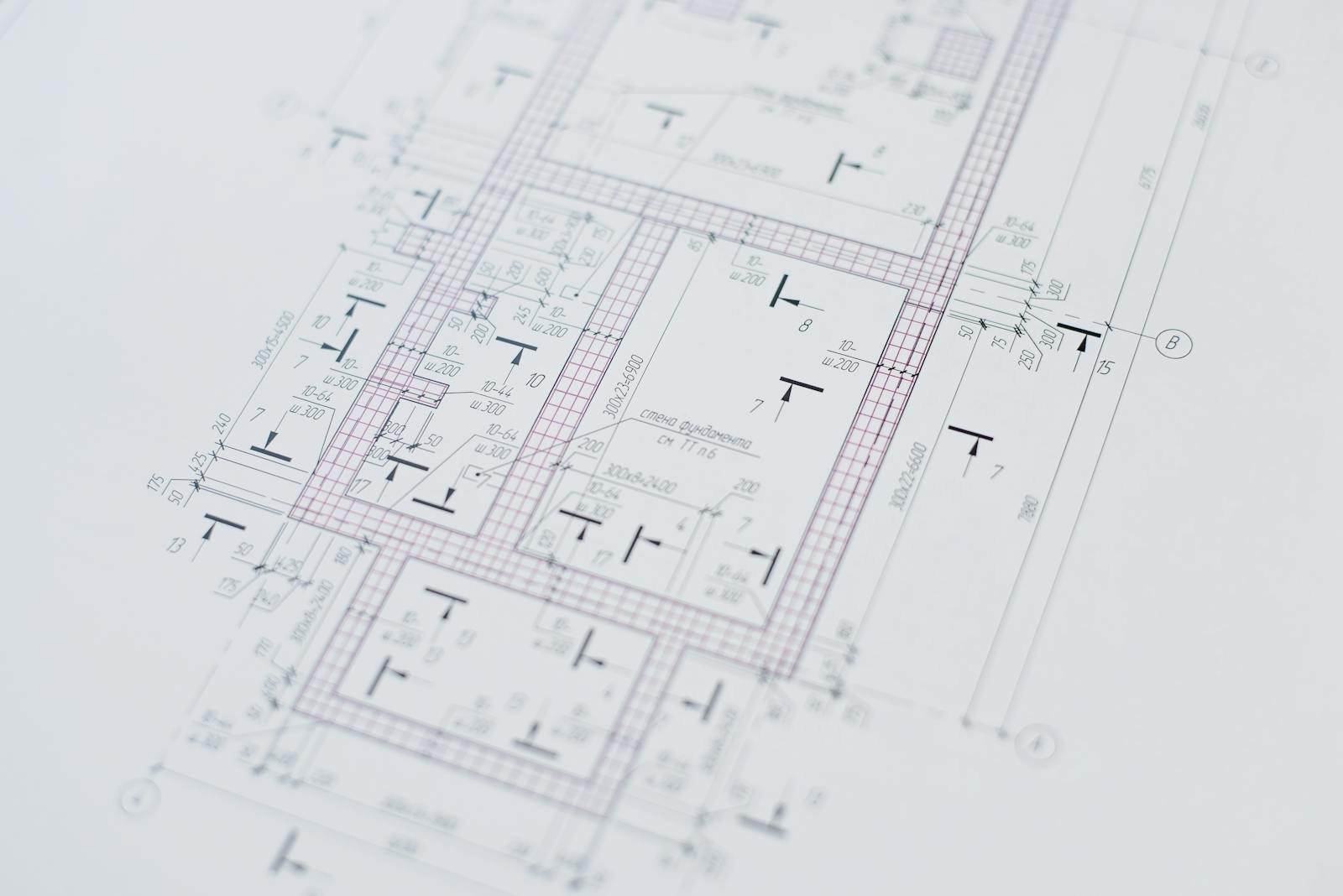
Spoiler : that's exactly like building a house without a blueprint. At first, everyone is excited. Then reality arrives : misunderstandings, forgotten features, last-minute changes, exploding costs. And suddenly the project starts falling apart.
A specifications document is not just a professional-looking PDF. It's a survival tool. It prevents the famous "Oh… I thought that was included." Because in mobile development, assumptions are expensive.
Very expensive.
A good specifications document is not only about technical details. It's mainly about user logic. Who is using the app ? Why are they using it ? Where ? Under what conditions ?
Because an app used on a couch with ultra-fast Wi-Fi is not the same as an app used in a parking lot with a weak signal. And many projects completely forget that. According to Statista (2024), the majority of mobile sessions worldwide happen on a degraded network. You cannot design only for the office.
The result ? The app launches. It looks "beautiful." But users leave.
They tap. They quit. They forget.
That's a trust issue. Users will not "make an effort" to understand your app. If they don't understand it quickly, they leave. Today, users compare your app to the biggest products on the market. Even if you are a startup. Even if you are alone. Even if your budget is limited.
Apple's Human Interface Guidelines are clear : clarity is the first design principle. Not feature richness. Clarity.
The real problem is that many specifications documents are full of features… but empty of priorities.
People want chat systems, notifications, loyalty programs, payments, maps, AI, admin dashboards, messaging, analytics.
But nobody answers the real question : what feature actually creates value ?
Spoiler : a V1 does not need everything. The goal of a first version is not to impress. It's to validate. To validate that real people actually use your product. That changes everything.
Because an unused app with 40 features is still an unused app. I will always prefer a simple app solving a real problem over a giant overcomplicated machine nobody wants to maintain.
And speaking of maintenance… People forget this part all the time.
An app is not a painting hanging on a wall. It's closer to a car. You need to maintain it, fix bugs, follow Android and iOS updates, monitor crashes, improve performance.
Otherwise ? The stores start punishing you. Ratings drop. Users lose trust.
And rebuilding trust is far more expensive than doing things properly from day one. Google Play Vitals actively penalizes unstable apps : degraded ranking, falling visibility, rising uninstalls.
So what should a good specifications document contain ? Not 80 useless pages. But at least :
Simple. Clear. Human. And understandable even for non-developers. Because a good project is not a project where only the developer understands what's happening. It's a project where everybody moves in the same direction.
That's just logic. A specifications document does not slow a project down. It prevents the project from collapsing.
And you ? Have you ever seen a project fail because the brief was too vague ? Book a 30-minute call to clarify your specifications before costs explode.
12 years of experience, iOS + Android, one dedicated contact. Free 30-minute call to scope your need — no commitment, no jargon.
Book a call →
"I have an app idea."
I hear this sentence almost every week.
And very often, the next sentence sounds like this : "We'll figure out the details later."
Spoiler : that's exactly like building a house without a blueprint. At first, everyone is excited. Then reality arrives : misunderstandings, forgotten features, last-minute changes, exploding costs. And suddenly the project starts falling apart.
A specifications document is not just a professional-looking PDF. It's a survival tool. It prevents the famous "Oh… I thought that was included." Because in mobile development, assumptions are expensive.
Very expensive.
A good specifications document is not only about technical details. It's mainly about user logic. Who is using the app ? Why are they using it ? Where ? Under what conditions ?
Because an app used on a couch with ultra-fast Wi-Fi is not the same as an app used in a parking lot with a weak signal. And many projects completely forget that. According to Statista (2024), the majority of mobile sessions worldwide happen on a degraded network. You cannot design only for the office.
The result ? The app launches. It looks "beautiful." But users leave.
They tap. They quit. They forget.
That's a trust issue. Users will not "make an effort" to understand your app. If they don't understand it quickly, they leave. Today, users compare your app to the biggest products on the market. Even if you are a startup. Even if you are alone. Even if your budget is limited.
Apple's Human Interface Guidelines are clear : clarity is the first design principle. Not feature richness. Clarity.
The real problem is that many specifications documents are full of features… but empty of priorities.
People want chat systems, notifications, loyalty programs, payments, maps, AI, admin dashboards, messaging, analytics.
But nobody answers the real question : what feature actually creates value ?
Spoiler : a V1 does not need everything. The goal of a first version is not to impress. It's to validate. To validate that real people actually use your product. That changes everything.
Because an unused app with 40 features is still an unused app. I will always prefer a simple app solving a real problem over a giant overcomplicated machine nobody wants to maintain.
And speaking of maintenance… People forget this part all the time.
An app is not a painting hanging on a wall. It's closer to a car. You need to maintain it, fix bugs, follow Android and iOS updates, monitor crashes, improve performance.
Otherwise ? The stores start punishing you. Ratings drop. Users lose trust.
And rebuilding trust is far more expensive than doing things properly from day one. Google Play Vitals actively penalizes unstable apps : degraded ranking, falling visibility, rising uninstalls.
So what should a good specifications document contain ? Not 80 useless pages. But at least :
Simple. Clear. Human. And understandable even for non-developers. Because a good project is not a project where only the developer understands what's happening. It's a project where everybody moves in the same direction.
That's just logic. A specifications document does not slow a project down. It prevents the project from collapsing.
And you ? Have you ever seen a project fail because the brief was too vague ? Book a 30-minute call to clarify your specifications before costs explode.
12 years of experience, iOS + Android, one dedicated contact. Free 30-minute call to scope your need — no commitment, no jargon.
Book a call →We write about mobile app development, user experience design, App Store optimization, project management, and industry trends. Our articles are based on real experience from client projects.
We aim to publish regularly with a focus on quality over quantity. Each article is written from hands-on experience, not generic advice.
Absolutely! Feel free to reach out via our contact page or book a consultation. We love hearing what questions our readers and clients have.
Most of my projects run remotely, and in practice that changes very little. We talk over video whenever you need to, not only at major milestones, and you can reach me with questions at any point during the project — I always answer.
You can also write to me directly on WhatsApp: same number I use every day, a French professional line that works internationally.