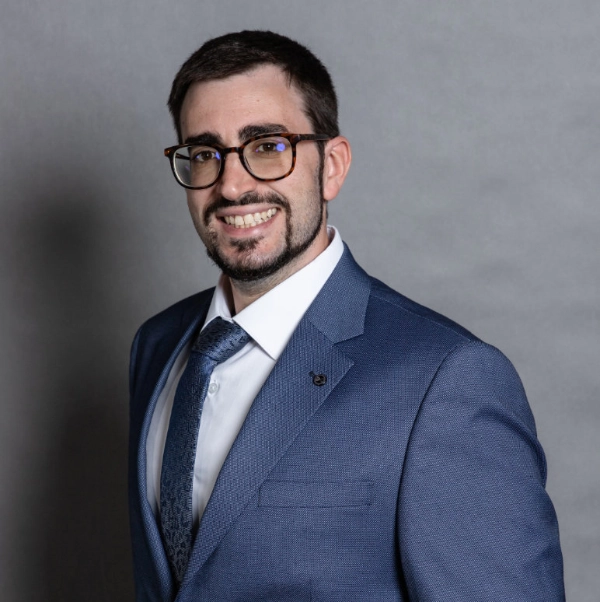
One single point of contact, from concept to publication. 12 years of experience. 15+ apps delivered.
In short: I build iOS and Android apps for clients in Vancouver (662,248 residents) and across British Columbia. One single point of contact, 12 years of experience, delivery from concept to publication in 8 to 16 weeks.
Your app is crashing and nobody is telling you.
You think everything is fine because your customer support inbox in Vancouver is empty.
Spoiler: that is very bad news.
The reality is that 96% of users who encounter a bug never report it. They do not hunt for your contact form. They delete the application and move on with their lives.
Meanwhile, your competitors in Vancouver with actively maintained apps are taking your users. The scariest part? You do not even realize it is happening.
Without monitoring tools and active maintenance, you are flying a plane completely blind.
To truly understand maintenance, let's look at exactly what happens when you decide not to invest in it for your app in Vancouver.
Months 1 to 3: Everything seems perfect. The app is live on the App Store and downloads are coming in. You think you saved money by skipping a maintenance plan. Nobody is complaining.
Months 4 to 6: Android releases a major system update. Suddenly, your account creation screen freezes on newer phones. Users do not email you, but the first 1-star reviews appear. Your rating in Vancouver drops from 4.8 to 4.1. You are losing future downloads every single day.
Months 7 to 12: A critical security vulnerability is found in an open-source library you use for handling payments. Without a developer to apply the patch, you are fully exposed to a customer data breach. You risk massive GDPR fines. Your crash rate climbs, and the rating drops to a toxic 3.2 stars.
Month 12 and beyond: Apple and Google change their compliance rules. You get an automated warning email. Without a compliance update within 30 days, your app is removed from the stores. Your entire initial development investment equals zero.
Let's think.
I build mobile applications the way a craftsman builds a house. With solid foundations.
I've been doing this job for 12 years from Bordeaux, designing iOS and Android apps meant to last. I refuse sloppy work. The key advantage of this method? Your application won't collapse at the first Apple or Google update.
I create clean tools that are easy to maintain and ready to evolve alongside your SMB or startup. Work done with care is a profitable investment for the long run.
You are launching your project in Vancouver.
And you are probably wondering who to work with to build your mobile app.
It is the first major decision you have to make. Some people think that to succeed, you absolutely need a big agency right around the corner. Others believe they should outsource to the cheapest team they can find overseas.
Both options come with serious tradeoffs.
A big agency will assign your project to a junior developer you have never met. An offshore team will deliver code you cannot read, three weeks behind schedule, with zero accountability.
The most important factor in the success of an app is not just the code. It is communication.
When you work with me, you get one dedicated expert with 12 years of experience and over 15 delivered projects. Not an account manager. Not a rotating team. One person who knows your project inside out.
Vancouver runs on Pacific time, which is nine hours behind me. That sounds like a problem and is usually the opposite: you send feedback at the end of your day, I work while you sleep, and there is a new build waiting when you open your laptop. It only breaks down if a project needs live conversation every day, which most do not.
Making that rhythm work is a matter of discipline rather than luck. It needs written decisions instead of remembered ones, a build you can install every week rather than a demo you watch me give, and a habit of asking questions in batches rather than one at a time. Done properly, the effective pace is a full review cycle every day, which is faster than most co-located projects manage — the gap stops being dead time and becomes the time the work happens in.
Vancouver's mix of tech, film and outdoor industries produces a recognisable split in the work. Consumer products where the design bar is high and the competition is one tap away, and field tools for people working somewhere without reliable signal. Those pull in opposite directions: the first spends its budget on polish, the second on resilience. Deciding which one you are building, out loud and at the start, prevents the most common failure — a product that is neither beautiful enough nor robust enough because the effort was split down the middle.
There is a Canadian point worth settling early too. Depending on your users and your sector, data residency may not be a preference but a requirement, and British Columbia has historically been strict about where public-sector information is stored. Choosing a hosting region on day one costs nothing. Moving a live database between countries after launch is possible, tedious and entirely avoidable.
Invent Better starts by removing, not adding. An app that does one thing properly ships in two months; one that does five things halfway never ships at all. Given that 80% of features planned in advance are never actually used (Pendo, 2025), the useful question is not whether a feature would be nice, but whether anyone still uses the app without it.
Modern maintenance is not just about fixing what is broken. The ultimate goal is to prevent things from breaking before the update reaches your users in Vancouver.
Here is the technical arsenal I deploy:
The most common scenario in Vancouver is code takeover. You had an application built by another developer or agency, and today, you are left alone with an unstable product.
I do not judge the past; I secure the future. Here is the takeover methodology:
The Audit: It is like a doctor examining a patient for the very first time. I comb through the code, verify the architecture, analyze the crash data, and read the store reviews.
The Triage: We do not rewrite everything immediately. We prioritize. Security flaws and major crashes come first. Then performance bottlenecks. Finally, the minor interface glitches.
The Stabilization Sprint (2 to 4 weeks): This is the emergency surgery room. I fix the top 10 most critical issues. I install monitoring probes. I add automated tests to the most fragile parts of your application for your customers in British Columbia.
Cruising Altitude: Once stabilized, the app enters a standard monthly rhythm. You finally stop stressing out every time your phone rings because of a complaining customer.
A year ago, a local company from British Columbia contacted me in a panic. Their mobile app was crashing over 40 times a day. Their store rating had plummeted to 2.1 stars. Negative reviews were pouring in, and the CEO was seriously considering shutting down the entire project.
Let's look at the facts.
I requested access to the code for a full one-week technical audit. The user interface was actually quite good, and the core idea was solid. The problem came from the foundations: deprecated libraries and terrible memory management.
I did not propose rebuilding from scratch. It was completely unnecessary.
I simply rewrote the critical 30% of the codebase: the authentication flow and the checkout process. I hooked up Crashlytics to monitor what was happening live. I added robust automated tests to protect these specific user journeys.
I do not quote maintenance without looking at the app first, because technical debt and traffic differ in every case. So I work in levels. The essential level covers monitoring, critical bug fixes, and keeping the app compatible with each new iOS and Android release. Higher levels add feature work on a predictable monthly basis.
I do not provide cookie-cutter quotes without seeing the patient first. Every app in Vancouver is unique, has different technical debt, and handles different traffic volumes. But here is how I structure my service levels.
The Essential level: This is life support. I provide 24/7 monitoring, fix critical blocking bugs, and ensure ongoing compatibility with new iOS and Android versions. Your app stays alive, functional, and compliant with store rules. It is your basic insurance policy.
The long-term survival of an application depends entirely on its ability to handle the specific, heavy usages of its industry in Vancouver.
Content delivery optimization is vital. Video lessons and heavy PDFs can cause the app size to bloat over time. I monitor video streaming performance and the rock-solid reliability of offline downloads for students across British Columbia. The parental notification system must also remain perfectly synced through every single iOS and Android update.
The app must be an absolute rock during peak rush hours (12-2 PM and 7-9 PM). Active maintenance ensures the total reliability of the order flow under heavy server load. I track GPS API accuracy for delivery drivers, and I maintain the fragile technical bridges between the mobile app and the restaurant's Point of Sale (POS) software. A bug here destroys the dinner service.
It includes absolute technical peace of mind. Practically, it covers critical bug fixes, OS compatibility updates for new iOS/Android versions, and proactive live monitoring (using Crashlytics). It is the foundation for survival.
For blocking bugs (like a checkout crash), intervention happens in hours, not days. I isolate the root cause and push the hotfix to the stores immediately. Apple and Google then take over for the final review process.
Yes, automated probes watch the code constantly. If the app collapses on a Sunday night in British Columbia, the system captures the logs instantly. I get the alert before your users even have time to complain.
We always start with a deep technical audit. I read the code, map out the technical debt, and find the immediate security flaws. Then, we run a stabilization sprint. We build nothing new until the foundation is solid.
The key point: Apple and Google release 4 to 6 major system updates every year. You must keep pace, or risk your application breaking entirely or being removed under the App Store Review Guidelines.
This is exactly why maintenance exists. We anticipate these breaks using OS beta versions. If an unexpected break still happens in production, I deploy a rapid hotfix to restore access for your users immediately.
I embed professional tools like Sentry and Firebase Crashlytics. These silent digital probes tell me exactly which line of code failed and on which specific smartphone model, without the user lifting a finger.
Absolutely. Trust requires total transparency. You receive a jargon-free summary: crashes prevented, bugs fixed, loading times tracked, and technical forecasts for the following month's roadmap.
Yes, this is called evolutive maintenance. Depending on our service agreement tier, we reserve a specific block of monthly hours exclusively dedicated to growing the app and building what your users request.
It is incredibly simple. You own 100% of your code and your administrator accounts (Apple, Google, Firebase). If you want to leave, I hand over updated documentation and you are free to go.

While you hesitate, your competitors in Vancouver are moving forward.
The mobile world moves fast. Very fast. Today, 63% of global web traffic comes from mobile devices (Statista, 2025). If you keep pushing back the creation of your app, someone else will happily take your spot in British Columbia.
But be careful, do not confuse speed with haste. Launching an unstable application is the worst possible strategy.
In short: you have to act fast, but above all, you have to do it right. ⏳
In 30 minutes, you will know exactly where to start.
Book a free call →
30 minutes to start your project
Book a free call →Most of my projects run remotely, and in practice that changes very little. We talk over video whenever you need to, not only at major milestones, and you can reach me with questions at any point during the project — I always answer.
Once we are working together, travelling to meet you on site can absolutely be arranged if your project calls for it. Travel costs are quoted separately, upfront and with no surprises.