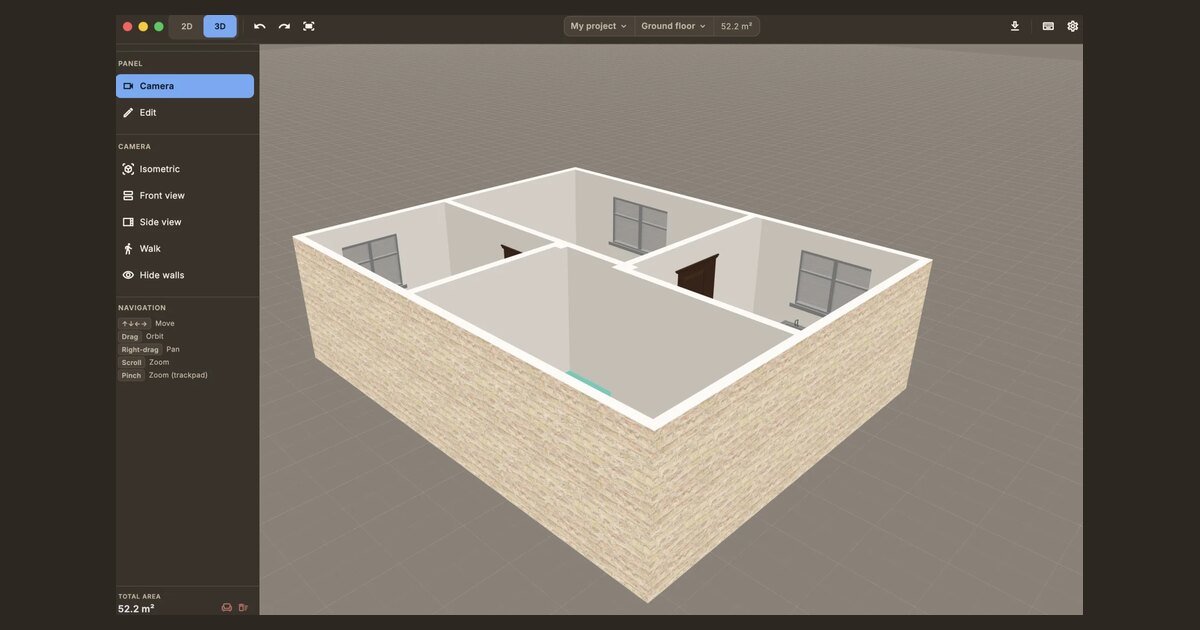
A Mac app and its web version: what the second one really costs
Sharing code between a desktop app and its browser version does not halve the work. Here is what the second platform ac…
 Mickael Romaniello
30 minutes, no slides, nothing to prepare.
Mickael Romaniello
30 minutes, no slides, nothing to prepare.
"This app would like to access your location." Today, tons of users get suspicious right at this moment. Logical.

"This app would like to access your location."
Today, tons of users get suspicious the second this message appears. And honestly ? It's logical.
Because users have learned to protect their data. And Apple has been pushing this logic hard for years.
The problem is that many apps ask for permissions… without really explaining why.
Camera. Location. Notifications. Microphone. Contacts.
The user opens the app… and immediately receives a series of sometimes incomprehensible prompts. Result : distrust. And when distrust shows up… trust drops very fast.
Apple watches this topic heavily. And it's not only a technical question. Because Apple doesn't only look at "Does the permission work ?" They mainly look at "Is this request justified and understandable ?"
For example :
This is a review requirement, not a style preference. Guideline 5.1.1(ii) states it directly : "Ensure your purpose strings clearly and completely describe your use of the data." (Apple App Store Review Guidelines 5.1.1, 2026). The same clause requires that users can withdraw consent through "an easily accessible and understandable way", and that paid functionality must not depend on granting access. See also the Human Interface Guidelines on privacy.
In short : "Improve user experience" fails on both counts — it names neither the data nor the use. A purpose string that names 1 feature and 1 reason passes; one that names 0 of either is the single most avoidable rejection in this list.
The problem is that many apps still use extremely vague descriptions like "Improve the user experience." But honestly… that says nothing.
And Apple hates vague. Users too. The key difference between a permission that gets granted and one that gets refused is usually 10 words of explanation shown at the right moment.
Because in the end, the real topic isn't the permission itself. The real topic is trust.
When an app clearly explains why it asks for something, how it helps the user, when that data is used, the perception changes completely.
Does the user understand what's happening ? Do they feel respected ? Do they feel manipulated ? These questions massively change an app's perception.
Apps that inspire trust are often the ones that ask the least… or that explain the best. Bottom line : Apple also requires that consent can be taken back, in "an easily accessible and understandable way", and that a privacy policy identify "what data, if any, the app/service collects, how it collects that data, and all uses of that data" (Apple App Store Review Guidelines 5.1.1, 2026). Asking for 2 permissions you can justify beats asking for 6 you cannot.
Do your iOS permissions explain their use clearly enough ? Book a 30-minute call to audit purpose strings before the next App Store Review.
Building apps since 2013, iOS + Android, one dedicated contact. Free 30-minute call to scope your need — no commitment, no jargon.
Book a call →
"This app would like to access your location."
Today, tons of users get suspicious the second this message appears. And honestly ? It's logical.
Because users have learned to protect their data. And Apple has been pushing this logic hard for years.
The problem is that many apps ask for permissions… without really explaining why.
Camera. Location. Notifications. Microphone. Contacts.
The user opens the app… and immediately receives a series of sometimes incomprehensible prompts. Result : distrust. And when distrust shows up… trust drops very fast.
Apple watches this topic heavily. And it's not only a technical question. Because Apple doesn't only look at "Does the permission work ?" They mainly look at "Is this request justified and understandable ?"
For example :
This is a review requirement, not a style preference. Guideline 5.1.1(ii) states it directly : "Ensure your purpose strings clearly and completely describe your use of the data." (Apple App Store Review Guidelines 5.1.1, 2026). The same clause requires that users can withdraw consent through "an easily accessible and understandable way", and that paid functionality must not depend on granting access. See also the Human Interface Guidelines on privacy.
In short : "Improve user experience" fails on both counts — it names neither the data nor the use. A purpose string that names 1 feature and 1 reason passes; one that names 0 of either is the single most avoidable rejection in this list.
The problem is that many apps still use extremely vague descriptions like "Improve the user experience." But honestly… that says nothing.
And Apple hates vague. Users too. The key difference between a permission that gets granted and one that gets refused is usually 10 words of explanation shown at the right moment.
Because in the end, the real topic isn't the permission itself. The real topic is trust.
When an app clearly explains why it asks for something, how it helps the user, when that data is used, the perception changes completely.
Does the user understand what's happening ? Do they feel respected ? Do they feel manipulated ? These questions massively change an app's perception.
Apps that inspire trust are often the ones that ask the least… or that explain the best. Bottom line : Apple also requires that consent can be taken back, in "an easily accessible and understandable way", and that a privacy policy identify "what data, if any, the app/service collects, how it collects that data, and all uses of that data" (Apple App Store Review Guidelines 5.1.1, 2026). Asking for 2 permissions you can justify beats asking for 6 you cannot.
Do your iOS permissions explain their use clearly enough ? Book a 30-minute call to audit purpose strings before the next App Store Review.
Building apps since 2013, iOS + Android, one dedicated contact. Free 30-minute call to scope your need — no commitment, no jargon.
Book a call →We write about mobile app development, user experience design, App Store optimization, project management, and industry trends. Our articles are based on real experience from client projects.
We aim to publish regularly with a focus on quality over quantity. Each article is written from hands-on experience, not generic advice.
Absolutely! Feel free to reach out via our contact page or book a consultation. We love hearing what questions our readers and clients have.
Most of my projects run remotely, and in practice that changes very little. We talk over video whenever you need to, not only at major milestones, and you can reach me with questions at any point during the project — I always answer.
You can also write to me directly on WhatsApp: same number I use every day, a French professional line that works internationally.